
Now available
Apple Music
Spotify
YouTube Music
Amazon Music
Beyond The Groove Review
(Holly Cooper/Mouthpiece Music)
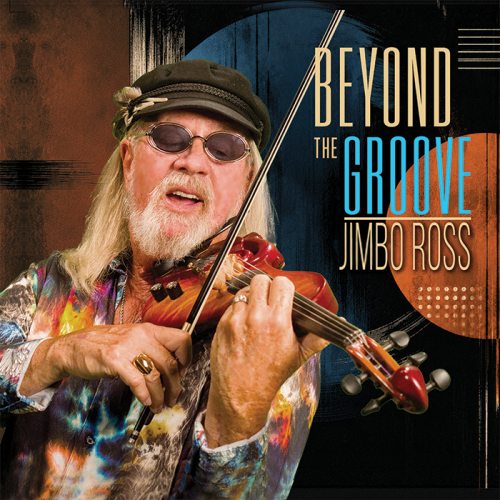
Now available.
Apple Music Spotify YouTube Music Amazon Music
BUY CDS ON BAND CAMP
Jazz comes alive with a fresh, distinctive voice on this new album from acclaimed viola/violinist Jimbo Ross. Joined by guitarist Joe Gaeta, pianist Stuart Elster, bassist Peter Marshall, and drummer Ron Wagner, Ross brings his unique sound and dynamic improvisational style to a collection of classic jazz standards and swinging favorites.
Featuring timeless compositions by Dizzy Gillespie, Thelonious Monk, Horace Silver, Miles Davis, and others, the album moves effortlessly from the driving bebop energy of “Groovin’ High,” “A Night in Tunisia,” and “Nica’s Dream” to the sophisticated grooves of “Solar,” “Gloria’s Step,” “Whisper Not,” and “Nutville.”
With its combination of electric strings, soulful piano, guitar, bass, and drums, this is a vibrant celebration of straight-ahead jazz—honoring the tradition while giving it a fresh and highly personal sound through Jimbo Ross’s remarkable 5-string electric viola.
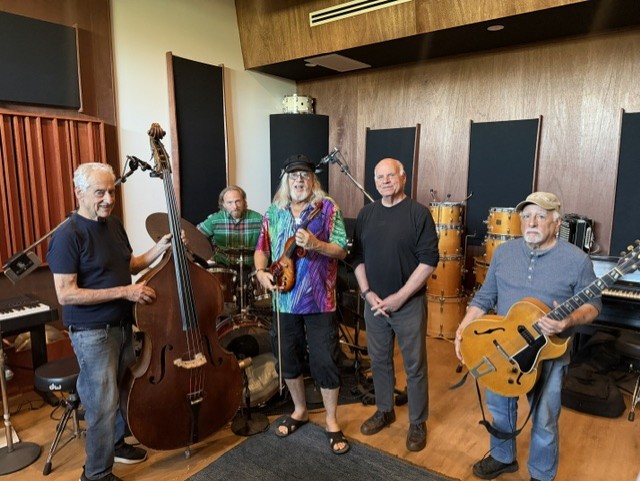
JIMBO ROSS - 5 String Electric Viola/Violin
JOE GAETA - Guitar
STUART ELSTER - Piano
PETER MARSHALL - Upright Bass
RON WAGNER - Drums
Recorded Live at The Sonic Boom Room, Venice, CA 03/2026
Engineered & Mixed by Kevin Jarvis
Mastered by Dave & Candi at D2 Mastering
Produced by Jimbo Ross
All Arrangements by Jimbo Ross & Joe Gaeta
Album Art Design & Cover Photo by
Rich Sumner @ Surfware Media
SPECIAL THANKS:
NIKA ROSS my Muse
Brandon MacDougal @ Liquid Violins
Henriksen Amplifiers
This Album is Dedicated to The Jazz Baroness Pannonica “NICA” Koenigswater
and all other Mentors of Jazz Musicians.
1. GROOVIN’ HIGH (6:38)
2. IN WALKED BUD (4:46)
3. A NIGHT IN TUNISIA (7:04)
4. PERI’S SCOPE (6:14)
5. AFTERNOON IN PARIS (4:23)
6. NICA’S DREAM (7:53)
7. JUICY LUCY (4:28)
8. BA-LUE BOLIVAR BA-LUES ARE (4:51)
9. WHISPER NOT (4:47)
10. I MEAN YOU (6:15)
11. GLORIA’S STEP (5:55)
12. SOLAR (5:43)
13. NUTVILLE (5:18)
REVIEWS & PRESS: BEYOND THE GROOVE
Beyond The Groove Review
(Holly Cooper/Mouthpiece Music)
Review: Jimbo Ross Beyond the Groove
The Jazz Page by D. Glenn Daniels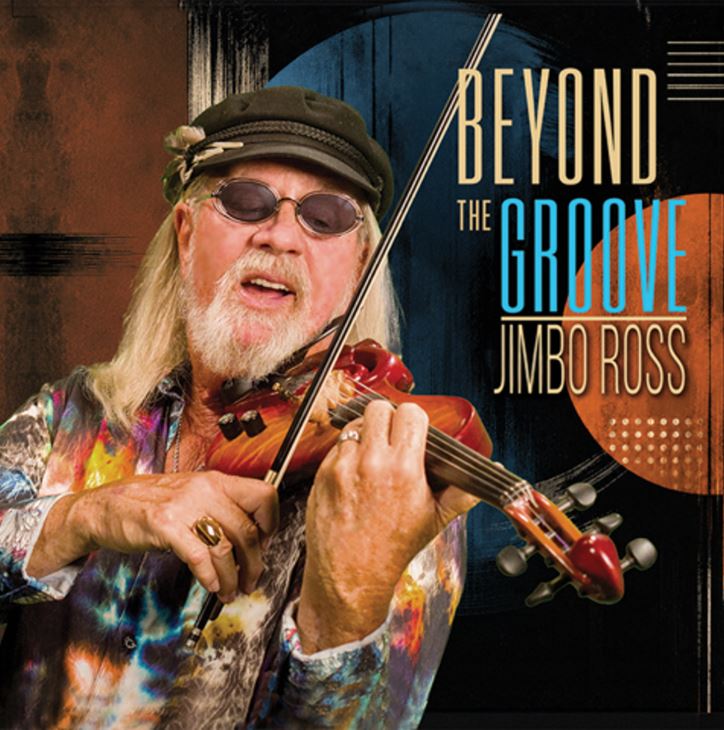
“Ross moves comfortably between agile, sharply accented phrases and more expansive melodic passages, making his instrument the voice for this production. Brisk swing, blues feeling, Latin accents, and gentler moments give the session a satisfying range. It’s an engaging recording that demonstrates how naturally the viola can express the vitality and lyrical possibilities of the jazz tradition.”
Genere: Music, Raves
Jimbo Ross gives classic jazz repertoire an appealing string-centered mode on Beyond The Groove, a spirited collection that pairs the warmth of his five-string electric viola/violin with the rhythmic drive of bebop and hard bop. Ross moves comfortably between agile, sharply accented phrases and more expansive melodic passages, making his instrument the voice for this production. Joining Ross are Joe Gaeta on guitar, Stuart Elster on piano, Peter Marshall on upright bass, and Ron Wagner on drums. The set draws from compositions by Dizzy Gillespie, Thelonious Monk, Horace Silver, Bill Evans, John Lewis, Benny Golson, Scott LaFaro, and Miles Davis, with arrangements that bring variety and personality to familiar territory. Brisk swing, blues feeling, Latin accents, and gentler moments give the session a satisfying range. It’s an engaging recording that demonstrates how naturally the viola can express the vitality and lyrical possibilities of the jazz tradition.
Michael Doherty’s Music Log
“Jimbo's work is absolutely wonderful… It’s like we are invited to a festive gathering, certain to raise your spirits.”
https://michaelsmusiclog.blogspot.com/2026/09/jimbo-ross-beyond-groove-2026-cd-review.html
Tuesday, September 29, 2026
Jimbo Ross: "Beyond The Groove" (2026) CD Review
On his new album, Beyond The Groove, the great Jimbo Ross focuses on material by Dizzy Gillespie, Thelonious Monk and Horace Silver, giving each composition his special magical touch. He plays that famous five-string electric viola and violin on this album, and is joined by Joe Gaeta on guitar, Stuart Elster on piano, Peter Marshall on upright bass, and Ron Wagner on drums. The arrangements are by Jimbo Ross and Joe Gaeta, and the album was produced by Jimbo Ross.
The album gets off to a wonderful start with "Groovin' High," a Dizzy Gillespie number. There is a fun, light, playful vibe as it begins with the interaction between Jimbo Ross and Stuart Elster. And when the musicians move into the main body, there is a good amount of cheer, especially in Jimbo's playing. It is like we are invited to a festive gathering led by Jimbo Ross. This is something certain to raise your spirits. Stuart delivers an excellent lead on piano, keeping things moving, keeping spirits high, while Peter Marshall's bass work beneath it has its own special charm. If you'd like to forget about the world's current troubles, this music should do the trick. A good guitar lead follows, Joe Gaeta at first keeping with the established dance, while adding his own delightful touches. And before the end of this opening track, we're treated to some brief, but lively drum solos by Ron Wagner. Then we return to that initial section, signaling the dance is complete. That's followed by "In Walked Bud," a great choice, for it seems to pick up where "Groovin' High" left off. Jimbo has a great freedom early on, taking off into some glorious territory, knowing he'll be followed. No one is lonely or alone in these places. It's as if setting off for the mountains, leading a troupe of musicians and other explorers. Joe's guitar lead follows, as he takes up a position in front, charting a new path with the same destination in mind. Stuart's piano lead seems to add more energy to the endeavor, shining more light upon the path. The interactions between the instruments in the second half are exciting, one of my favorite sections of this album. Fantastic. This is the first of three Thelonious Monk compositions included on this album.
The second Dizzy Gillespie tune, "A Night In Tunisia," begins with its great rhythm, and soon we are off a new journey, familiar and yet new, Jimbo finding fresh territory to explore, and new ways to explore what might have been so familiar, and doing so with skill and joy. He takes charge of this place. We know we are in good hands, as he charms us right out of our blues. Joe Gaeta's guitar lead delights and pops and moves. At the heart of this track is its rhythm. There is some outstanding stuff on both drums and bass. Everything is working perfectly here. Then "Peri's Scope" has a sweeter, softer tone at the start, a friendly hand reaching out and taking hold, leading us in a dance. Our partner hums to us, making sure we remain within the music, within the dance. But how could we ever miss a step with these guys? There are magical touches to Stuart's piano lead, as if we're entering a fairy tale before things begin to rock a bit more. Reality or fantasy, it doesn't matter, as long as we can stay in the realm these musicians have opened for us. The guitar lead focuses our attention on the movement before Jimbo then sweeps us up into the air again and builds something for us all there, a place where we can enjoy ourselves.
There is a light, pleasant vibe at the start of "Afternoon In Paris," feeling like a wonderful walk through daylight when the air is cool and the flowers are in bloom. This music takes us to places we long to go, helping us escape from the twisted mess of our current landscape. And during the piano lead we sense more excitement in the air. It is no longer a casual stroll. Now there is a point to our excursion, a purpose. Though that doesn't in any way lessen our enjoyment. And everyone we meet along the way gets caught up in the joy of the movement, the joy of the moment. "Nica's Dream" follows. There is a different kind of energy here, a different sort of passion. Here the dance has a more intimate, more focused sense. There is something classy here. Furs and good wine. But nothing stuffy. Elegance and smiles, the strings seem to express. And joy, joy, joy. The guitar spins us around on the floor, seeming to promise an endless celebration, an endless escape from whatever it is we are eager to forget. This song was composed by Horace Silver, the first of three Horace Silver tunes included on this disc. It's followed by "Juicy Lucy," also written by Horace Silver. There is a delicious, playful vibe to it from the start, the kind of song that struts in, but never takes itself too seriously. Life is much too short for that anyway. Let's enjoy ourselves. The guitar lead certainly encourages us to do that very thing. and the beat keeps us feeling light, never aware of our own bulk, our own dimensions. And during Stuart's piano lead, we can carry ourselves on our toes, twirling around with ease.
Jimbo Ross' instrument takes on a certain character at the beginning of "Ba-lue Bolivar Ba-lues Are," creating this character, filling it out, and dancing it about. It is so vivid for us. And perhaps as we listen, we become that character. Why not? Jimbo's work is absolutely wonderful, one of the album's most delightful performances. And Stuart Elster delivers a strong lead on piano, reminding us how good life can be. Jimbo Ross again delivers some excellent work, over a cool rhythm, to start "Whisper Not," a tune composed by Benny Golson. And during Stuart's piano lead, you might find yourself snapping your fingers or anything else you can snap. That's followed by "I Mean You," the final Thelonious Monk composition included on this album, and it's a fun one. This is one of the most delightful tracks, in large part because of Jimbo's playing, his approach. And the piano is hopping. This track also features an excellent guitar lead. Everything is moving, swinging. This track is one that should add some cheer to your day.
Things then slow down a bit for "Gloria's Step," a track with warm tones and a late-night, kind of romantic feel, particularly during Stuart's piano lead. Yet, that doesn't mean this track lacks excitement. Just listen to that guitar lead. And there is a good vibe during Jimbo's lead. Thing then move at a good clip on this rendition of Miles Davis' "Solar." There is certainly a bright feel to the music, to the approach, and a joy in the sound. Again, this is music that will melt away all troubles and distractions. This track features some excellent drumming, and I'm especially fond of that work on drums toward the end. The album concludes with its third Horace Silver composition, "Nutville," which has a cool vibe from the start, with that steady rhythm and delicious work by Jimbo on strings. Partway through, it picks up the pace, Jimbo's strings flying around the room with confidence, with knowledge, with experience, and we can't help but get caught up in the motion. This track also contains some fantastic stuff on piano. A perfect way to end this excellent album.
CD Track List
- Groovin' High
- In Walked Bud
- A Night In Tunisia
- Peri's Scope
- Afternoon In Paris
- Nica's Dream
- Juicy Lucy
- Ba-lue Bolivar Ba-lues Are
- Whisper Not
- I Mean You
- Gloria's Step
- Solar
- Nutville
Beyond The Groove was released on August 21, 2026 on Bodacious Records.
Jimbo Ross | Beyond the Groove
(Bodacious Records, 2026)
Wild Mercury Rhythm by C. Michael Bailey

Jimbo Ross and his quintet offer a reminder of the power of pure, organic swing. At high or low velocity, Ross makes these pieces swing hard. By taking the road less traveled—interpreting bebop’s demanding architecture on an instrument historically sidelined by the genre—Ross delivers a clean study in a welcome modern reinvention.”
Image courtesy of Bodacious Records
What’s the definition of “perfect pitch?”
Throwing a viola into a dumpster without hitting the rim.
What’s the definition of “perfect pitch?”
Throwing a viola into a dumpster without hitting the rim.
The poor, misunderstood viola. Even the master Niccolò Paganini, with his grand Sonata per la Grand Viola (1934), nor Hector Berlioz’s Harold in Italy (1934) — the former resulting from a disagreement between Paganini and Berlioz about the lack of viola virtuosity in Harold — could save the instrument from decades of orchestral bench-warming jokes. Yet, Jimbo Ross has spent over fifty years dismantling this bias, first gaining jazz recognition when trumpeter Don Ellis introduced him to a festival audience as “the only jazz violist in captivity.”
A practitioner of the 5-string electric viola, Ross has spent decades navigating the line between classical precision, blues grit, and straight-ahead jazz improvisation. On Beyond the Groove (Bodacious Records, 2026), Ross presents his chosen instrument within a supportive and texturally grounded quintet. The core band features Stuart Elster on piano, Joe Gaeta on guitar, Peter Marshall on bass, and Ron Wagner on drums. Operating entirely in an acoustic, organic space—devoid of digital pedals or distortion—the ensemble functions as a swinging unit, creating a conversational backdrop that allows the warm, cello-like lower register and upper range of Ross’s instrument to carry the melodic weight of classic bebop and hard bop.
This release arrives as a successor to Ross’s recent recording baseline, notably his 2025 album So Do It! (Bodacious Records, 2025) and his preceding label debut, Jazz Passion & Satin Latin (Bodacious Records, 2024). Where his prior work leaned into a blues-infused hard-bop aesthetic that merged funk undercurrents with straight-ahead jazz, Beyond the Groove shifts its primary focus toward a foundational bebop and post-bop repertoire. The record lands in a contemporary jazz landscape that frequently favors avant-garde abstraction or heavy electronic fusion, making Ross’s project a deliberate statement of purpose. By re-examining canonical masterworks from composers like Thelonious Monk, Benny Golson, and Miles Davis through the distinct tonal voice of the viola, the Ross’ vision bridges historical reverence and active, physical swing.
The core of the record lies in how Ross and his quartet handle these mid-century masterworks, proving that the viola can speak with the same velocity and articulation as a horn. Ross introduces Thelonious Monk’s “Ba-Leu Bolivar Ba-Lues-Are” by leaning into its intrinsic rhythmic quirks. The ensemble shifts from punchy, percussive bop motifs into a rolling, bluesy groove, creating a steady pocket for guitarist Joe Gaeta, whose solo offers dynamic variation and clean, linear phrasing. Benny Golson’s “Whisper Not” addresses the historical myth of viola clumsiness. Ross navigates the complex harmonic shifts with speed, utilizing the upper register of his 5-string setup to deliver clean lines that maintain accurate intonation and a warm tone. At high or low velocity, Ross makes these pieces swing hard.
Ross applies this structured approach to the music of Bill Evans, specifically by including “Peri’s Scope” and Scott LaFaro’s associated trio staple, “Gloria’s Step.” Rather than leaning into the impressionistic, modal wash traditionally tied to Evans’s keyboard architecture, Ross uses the precise bow control and tactile clarity of his five-string setup to pull the underlying melodies into a sharp, definitive relief. By choosing a slower, deliberate tempo on “Peri’s Scope,” he sustains notes longer to anchor the harmony, carving out room for Stuart Elster to drive the piano lines forward with a firm physical touch. Instead of drifting through abstract textures, the interpretation reshapes the composition into a bright, linear train of thought, trading impressionistic ambiguity for straight-ahead melodic momentum.
Built in clear instrumental contrast, Monk’s “I Mean You” opens with a low-register dialogue between Stuart Elster’s piano and Peter Marshall’s bass. Ross enters through these dark textures with a bright viola motif before the full quintet transitions into a fast-paced, rhythmic charge driven by Ron Wagner’s cymbal work. Operating as a hard-driving cooker, Miles Davis’s “Solar” (another frequent vehicle for Evans) pushes the technical pacing of the rhythm section. Ross handles the melodic head with a horn-like urgency, followed by harmonic counterplay between his viola and Elster’s piano comps. Shifting tempos and sharp Latin-jazz inflections define the closing rendition of Horace Silver’s “Nutville.” The quintet maintains an even energy throughout, executing rapid-fire instrumental trades before building to a climax that demonstrates structural complexity and raw physical swing.
Beyond the Groove is a clear, forward-looking statement in the 2026 jazz landscape. In an era where contemporary releases frequently obscure tradition under dense, overproduced digital soundscapes or lean toward sterile, academic abstractions, Jimbo Ross and his quintet offer a reminder of the power of pure, organic swing. By taking the road less traveled—interpreting bebop’s demanding architecture on an instrument historically sidelined by the genre—Ross delivers a clean study in a welcome modern reinvention.
JW Vibe by Jonathan Widran
“Ross turns 13 classics into a playground for imagination, virtuosity and sheer musical joy. What makes Beyond the Groove so satisfying is not simply Ross’ astonishing command of the viola. It is the generosity with which he shares the music. Every tune becomes an invitation—to swing, experiment, trade ideas and rediscover compositions that deserve another hearing. The result is a celebration of jazz tradition that never sounds trapped by it.”
JIMBO ROSS, Beyond the Groove
Jonathan Widran
Jazz history is filled with familiar names and celebrated recordings, but some of its most rewarding discoveries live just outside the spotlight. Jimbo Ross has made a specialty of finding those pieces and giving them a new life, and on Beyond the Groove, his third jazz project, he approaches the canon with the restless curiosity of an artist who hears possibility in every phrase. Armed with his five-string electric viola and joined by the longtime ensemble he has developed remarkable chemistry with, Ross turns 13 classics into a playground for imagination, virtuosity and sheer musical joy.
Ross’ instrument remains one of the album’s great attractions. Its ability to move from the earthy lower register of the viola through its resonant middle range and into soaring violin-like territory gives him an unusually broad palette. More important, he uses that range expressively rather than as a novelty, shifting from clipped, percussive figures to long melodic lines, quicksilver runs and unexpected bursts of high-register color.
“Groovin’ High” immediately establishes the spirit. Ross trades playful motifs with pianist Stuart Elster before the tune opens into a swinging ensemble workout featuring extended piano and guitar improvisations from Joe Gaeta. The viola darts, skips and climbs above Peter Marshall’s plucky bass and Ron Wagner’s crisp drumming, setting up the album’s recurring pattern of Ross presenting the melody before handing the spotlight to the band.
That collaborative instinct is especially evident on Thelonious Monk’s “In Walked Bud,” where a funky rhythmic foundation supports Ross’ dancing interpretation before Gaeta, Elster and the rhythm section each add their own perspective. “A Night in Tunisia” expands the formula further, moving between percussive viola passages, faster swing sections and fiery guitar and piano solos. Rather than treating these standards as sacred relics, Ross and his quartet use them as launchpads.
The slower selections provide an essential counterweight. Bill Evans’ “Peri’s Scope” brings a lighter, more lyrical touch, with Ross floating above an easy swing while Elster’s piano and Gaeta’s guitar add subtle color. “Gloria’s Step,” another Evans-associated gem, takes on a gently wistful character, while John Lewis’ “Afternoon in Paris” finds the quartet returning to a brighter, more buoyant groove. These shifts in pace broaden the album’s emotional and sonic palette, giving Ross and his ensemble room to reveal their lyrical sensitivity and improvisational fire.
Ross is particularly effective when the arrangements allow contrasting voices to collide. Horace Silver’s “Nica’s Dream” combines Latin-inflected rhythm with rapid-fire viola, guitar and piano exchanges, while “Juicy Lucy” develops a wonderfully playful dialogue between Ross and Gaeta. On Monk’s “I Mean You,” high viola figures hover above darker bass and piano colors before the performance erupts into another fast-moving exchange. “Whisper Not” similarly builds from stop-and-start phrases into a muscular swing showcase.
By the time the quartet reaches Miles Davis’ “Solar” and Silver’s “Nutville,” the musicians seem to be operating on pure momentum, with Ross navigating the upper reaches of his instrument while the band continually reshapes the groove beneath him.
What makes Beyond the Groove so satisfying is not simply Ross’ astonishing command of the viola. It is the generosity with which he shares the music. Every tune becomes an invitation—to swing, experiment, trade ideas and rediscover compositions that deserve another hearing. The result is a celebration of jazz tradition that never sounds trapped by it.
Jersey Jazz by Joe Lang
Sept 2026
“It does not take long to find the sound of Ross’s viola/violin totally welcoming. The entire session grabs you from the first notes and you will be digging the music throughout the full program.”
FULL REVIEW:
A five-string electric viola /violin is not a typical instrument to be found in a jazz context, but that is exactly what leader Jimbo Ross plays on Beyond the Groove (Bodacious Records – 1009). With support from guitarist Joe Gaeta, pianist Stuart Elster, bassist Peter Marshall and drummer Ron Wagner, Ross swings his way through a baker’s dozen jazz classics, Dizzy Gillespie’s “Groovin’ High” and “Night in Tunisia;” Thelonious Monk’s “In Walked Bud,” “Ba-Lue Bolivar Ba-Lues Are” and ‘I Mean You;” Horace Szilver’s “Nica’s Dream,” “Juicy Lucy” and “Nutville;” Bill Evans’s “Peri’ Scope;” John Lewis’s “Afternoon in Paris;” Benny Golson’s “Whisper Not;” Scott LaFaro’s “Gloria’s Step” and Miles Davis’s “Solar.” It does not take long to find the sound of Ross’s viola/violin totally welcoming. He takes full advantage of the extended range available with the added fifth string. He gives ample solo space to Gaeta and Elster who are nicely creative. The entire package grabs you from the first notes and you will be digging the music throughout the full program. (bodaciousrecords.com)
Making a Scene by Dee Dee McNeil
September 24, 2026
“Ross continues his awesome individuality and creativity, exploring what his string mastery can bring to jazz. He has a distinctive sound and brings so much great energy and excitement to every song he performs. The magnificent ensemble puts beauty and energy into each tune they pick.”
JIMBO ROSS
BEYOND THE GROOVE
Bodacious Records
Jimbo Ross, 5-string electric viola/violin; Joe Gaeta, guitar; Stuart Elster, piano; Peter Marshall, upright bass; Ron Wagner, drums.
Jimbo Ross plays a five-string electric viola that was custom-designed by Ojai-based luthier Brandon McDougall, who is founder of Liquid Violins. The added E string to the traditional viola gives Ross access to the violin’s upper register, but it still retains the viola’s rich middle and lower octaves. As an opener, you hear Jimbo Ross’s incredible talent shine on the Dizzy Gillespie tune, “Groovin’ High” that begins this album. Ron Wagner makes a bold statement on drums.
Fifty years ago, jazz trumpeter Don Ellis introduced Ross as a surprisingly gifted string player, announcing to the ladies and gentlemen in their audience, “the only jazz violist in captivity.”
In 2026, Ross continues his awesome individuality and creativity, exploring what his string mastery can bring to jazz. He has a distinctive sound. On this album, he reimagines compositions by some of the gold standard names in jazz including Miles Davis, Benny Golson, Bill Evans, Horace Silver, Monk, Dizzy and John Lewis.
Ross continues his swinging delivery with “Monk’s” standard, “In Walked Bud.” Guitarist Joe Gaeta takes his time improvising creatively during this arrangement. Ross and Gaeta have been friends since the 1970s. They have a special magic when playing together. Then, enters Stuart Elster on piano. As always, this sensitive pianist is tinkling the keys with improvised creativity.
Peter Marshall opens the Dizzy gem, “Night in Tunisia,” playing the familiar bass line we’ve come to know and love. Once again, this magnificent ensemble puts beauty and energy into each tune they pick. That’s the one thing I have always appreciated about Jimbo Ross and his recordings. He brings so much great energy and excitement to every song he performs. Jimbo Ross is inspirational and sincere. He’s not just playing a tune we’ve heard a million times. The string master puts his heart and soul into the music, inspiring his bandmates to do the same. In the midst of shifting tempos, inventive solos, and the magic of Jimbo Ross on his specialized viola/violin instrument, you will also enjoy his band and the way they reinvent jazz standard songs we know and appreciate. Jimbo Ross and his band make each familiar song sound remarkably refreshed.
Reviewed by Dee Dee McNeil
BEYOND THE GROOVE - REVIEW:
5.0 out of 5 stars Cheerful Jazz Classics
Reviewed in the United States on September 6, 2026James "Jimbo" Ross is a recording session and touring musician whose credits over the decades are extraordinary. He worked with Frank Sinatra, Tony Bennett, Michael Bublé, Paul McCartney, Ray Charles, James Brown, Bob Dylan, Aretha Franklin, Nina Simone, Sarah Vaughan, Stevie Wonder, Michael Jackson, Roy Orbison, Bobby “Blue” Bland, Earth, Wind & Fire, Elton John, Herbie Hancock, Michael Brecker, Horace Silver. Pete Townshend, Bob Dylan, Johnny Mathis, The Moody Blues, Roy Orbison, and Elton John! Among others. He is also a band leader, and this is his third album. Jimbo's instrument is unusual — the electric, i.e., amplified, viola and lately a viola-violin hybrid, thanks to the addition of an E string to provide the upper registers. This album focuses on 13 straight ahead jazz renditions of classic pieces from the pantheon of hard bop and post bop. His Southern California quintet includes electric jazz guitarist Joe Gaeta, pianist Stuart Elster, acoustic bassist Peter Marshall, and drummer Ron Wagner, all with similar session and album credits. With so much experience, the group performs the arrangements by Jimbo and Joe with aplomb. Indeed, the tight, sparkling interactions are accompanied with their obvious enjoyment. The tracks are uptempo, bright, and rousing.
The album begins with Dizzy Gillesie's Grooving High. After the call-response theme, Jimbo stretches out, setting a high bar met in turn by improvisations of piano and guitar. Thelonious Monk's In Walked Bud is a fitting follow-up with an exciting propulsive deep groove and instrumental layering. Gillespie's A Night in Tunisia becomes a powerful epic. Jimbo uses the entire range of his instrument; Gaeta increases the momentum; and Elster adds drama. Peri's Scope is an early (1959) lesser known composition of Bill Evans. It has his expected lyricism, but it is strongly rhythmic. John Lewis is represented by Afternoon in Paris from 1949. The sweet amble shifts into a cheerful trot. Horace Silver's Nica's Dream is in reference of Pannonica de Koenigswarter, the jazz patron and Muse. The affectionate honor is marked with various sections of solos from a meditative dance to a Latin-flavored pulse to a blazing conclusion. Juicy Lucy, another Silver piece, cools down to a bouncy sashay. Monk returns with Ba-lue Bolivaar Ba-lues Are that affords a rhythmic challenge to the group that takes advantage of string slides, piano percussion, and an expansive guitar work. Benny Golson's Whisper Not, a Jimbo vehicle, leads to the third Monk piece, I Mean You, which the band conveys with wit and charm. Next is Gloria's Step by Scott LaFaro, Evan's bassist; the tempo shifts downward to a more meandering contemplative dance. Solar from Miles Davis stokes the fire yet again, and the album comes to rest with Silver's Nutville. Beyond the Groove is liveliness and delight....and smiles.
AMAZON MUSICBEYOND THE GROOVE - REVIEW:
Bebop Spoken Here (UK) by Lance Liddle
Tuesday, September 22, 2026“Ross is surely the world's greatest 5-string jazz viola player. Thirteen tracks by the best in the bebop business - Monk, Silver, Dizzy, Evans, Lewis, Miles, Golson. I can't recommend this highly enough. Listen to just one track - any one track and you'll be convinced. Boppers of the world unite.”
Album review:
Jimbo Ross - Beyond the Groove.
(Bodacious Records)
Jimbo Ross (5-string viola); Stuart Elster (piano); Joe Gaeta (guitar); Peter Marshall (bass); Ron Wagner (drums)
Ross is surely the world's greatest 5-string jazz viola player. That he may be the only 5-string jazz viola player doesn't detract from his ability to swing the oft maligned instrument. Those who rank the viola alongside the banjo, oboe and accordion obviously hadn't heard Jimbo. He gets a mellow sound that doesn't grate like violins sometimes do. The extra string means he can stray into violin territory should he wish to do so. Perhaps if children began learning on a suitably sized viola rather than a violin the parents would be more tolerant towards their early strivings. Just a thought.
With his four associates reading from the same hymn sheet, the quintet takes a modern look at some bop and post bop classics. It doesn't sound dated nor pretentious - not in the slightest. These are musicians playing instruments, not twiddling knobs or dancing on pedal boards crammed with distortion units. The way it was then so it is now!
Thirteen tracks by the best in the bebop business - Monk, Silver (3); Dizzy, Evans (2); Lewis, Miles, Golson (1). I can't recommend this highly enough. Listen to just one track - any one track and you'll be convinced. Boppers of the world unite. Lance
Groovin' High; In Walked Bud; A Night in Tunisia; Peri's Scope; Afternoon in Paris; Nica's Dream; Juicy Lucy; Ba-Lue Bolivia Ba-lues-Are; Whisper Not; I Mean You; Gloria's Step; Solar; Nutville